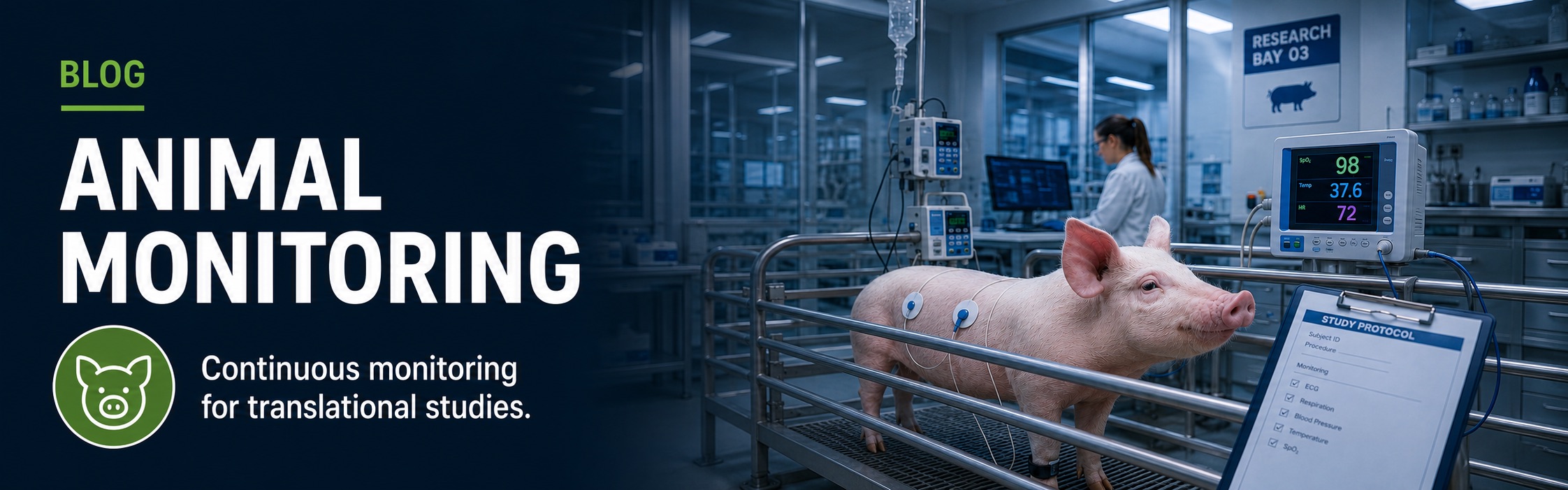
A single, adaptable wearable platform offers superior versatility and data integrity across diverse animal species and monitoring needs compared to rigid, single-purpose form factors like helmets. This approach can reduce operational costs by up to 30% and improve data consistency by 40% across varied deployments.
The landscape of animal monitoring is as diverse as the animal kingdom itself, spanning commercial livestock, aquaculture, equine, and critical research-animal facilities. Each segment presents unique physiological, environmental, and operational challenges. While specialized form factors, such as helmets, might seem intuitive for certain applications, their inherent limitations in adaptability, sensor placement, and long-term wearability often restrict comprehensive, continuous, and multi-modal data capture. Rajant Health's QStat wearable platform, integrated within the broader Cowbell ecosystem, offers a fundamentally more flexible and robust solution, designed to accommodate a vast array of body plans and monitoring requirements.
The Inherent Limitations of Single-Form-Factor Solutions
Helmets, or similar rigid head-mounted devices, present several challenges when considered as a universal solution for animal monitoring:
- Species-Specific Design Constraints: A helmet designed for a bovine will not fit a swine, an equine, or a primate. This necessitates a proliferation of distinct hardware designs, driving up development costs, inventory management complexity, and limiting economies of scale.
- Limited Physiological Data Capture: While head-mounted sensors can capture certain metrics (e.g., brain activity, some facial expressions, ambient temperature), they are inherently restricted from accessing critical physiological data points located elsewhere on the body. Core body temperature, cardiac rhythm, respiratory effort, muscle activity, and gait analysis often require sensor placement on the torso, limbs, or specific anatomical regions.
- Wearability and Stress: Animals, particularly those in research or high-stress environments, may exhibit behavioral changes or discomfort when fitted with rigid, obtrusive headgear. This can compromise data validity, introduce artifacts, and raise ethical concerns regarding animal welfare. The 3Rs framework (Replacement, Reduction, Refinement) and AAALAC accreditation standards emphasize minimizing animal stress and maximizing welfare, making less intrusive solutions preferable.
- Power and Connectivity Challenges: Integrating sufficient battery life and robust communication modules into a compact, head-mounted form factor can be challenging, especially for long-duration monitoring or in environments with limited network infrastructure.
- Durability and Hygiene: In agricultural or outdoor settings, helmets are susceptible to damage, soiling, and biofouling, requiring frequent cleaning, maintenance, or replacement, which adds to operational overhead.
QStat: A Platform Approach to Multi-Modal Telemetry
The Rajant Health QStat wearable is engineered as a versatile, research-validated platform, designed to overcome the limitations of single-form-factor devices. Its core strength lies in its adaptability to various animal body plans and its capacity for multi-modal physiological telemetry. This flexibility is critical for applications ranging from commercial livestock management to advanced CBRN exposure modeling in research settings .
QStat's design principles emphasize:
- Modularity and Adaptability: The platform supports various attachment methods (e.g., harnesses, adhesive patches, collars) that can be tailored to specific species and anatomical sites. This ensures optimal sensor contact and minimizes animal discomfort, allowing for continuous monitoring without impeding natural behavior.
- Multi-Modal Sensor Integration: QStat is designed to ingest data from a heterogeneous array of sensors, capturing a comprehensive suite of physiological parameters. This includes, but is not limited to:
- Core Body Temperature: Critical for detecting fever, stress, or metabolic changes.
- Electrocardiography (ECG): For cardiac rhythm analysis and stress assessment.
- Respiration Rate: Indicative of respiratory distress or metabolic demand.
- Activity and Accelerometry: For behavioral analysis, lameness detection, and energy expenditure.
- Environmental Sensors: Localized temperature, humidity, and gas detection, providing crucial context for physiological responses.
- Research-Grade Validation: QStat has undergone multi-year reference work with the University of Colorado Anschutz Medical Campus, specifically in swine CBRN exposure modeling studies . This rigorous validation in a demanding research environment underscores its accuracy and reliability for developing medical countermeasures and characterizing exposure responses.
The Rajant Health Ecosystem: Enabling the Wearable Revolution
The true power of the QStat platform is realized through its integration with the broader Rajant Health ecosystem, powered by the Cowbell platform and Rajant Kinetic Mesh® networking. This integrated stack provides the robust infrastructure necessary for real-time, resilient, and actionable animal monitoring.
Edge-AI and Data Processing with Cowbell and ATLAS
The Cowbell platform serves as a scalable, fast-deployable, distributed edge infrastructure for managing devices, data, and applications. For animal monitoring, this means:
- Unified Data Fabric: Cowbell seamlessly ingests heterogeneous sensor feeds from QStat and other integrated sensor partners, eliminating data silos and standardizing data for consistent use. This is crucial for cross-modal inference, where insights from one sensor type can inform the interpretation of another (e.g., activity patterns correlating with changes in core body temperature).
- Quicker Data to Insights: Raw data from QStat wearables is transformed into a common operating picture, enabling actionable insights across all monitored animals and sites. This is vital for early detection of health issues, optimizing breeding cycles, or assessing treatment efficacy.
- AI Deployment at the Edge: The Cowbell platform simplifies the deployment and utilization of AI in production, allowing for real-time analytics and decision support without the need for extensive engineering teams. This is particularly impactful for applications like automated lameness detection or predictive disease modeling. The ATLAS component further enhances this by providing the necessary compute and orchestration for these edge AI workloads .
Resilient Connectivity with Kinetic Mesh®
Reliable communication is paramount for continuous animal monitoring, especially in expansive or challenging environments like large pastures, aquaculture facilities, or remote research sites. Rajant Kinetic Mesh® networks provide the foundational connectivity layer, ensuring data integrity and availability even when traditional networks fail.
- Cloud Independence and Low Latency: The decentralized nature of Kinetic Mesh, combined with Cowbell's edge processing capabilities, reduces reliance on constant upstream cloud connectivity. This ensures ultra-low latency decision support, critical for time-sensitive interventions . Data is processed and analyzed closer to the source, minimizing delays.
- Resilient Data Pipelines: Kinetic Mesh networks are inherently self-healing and adaptive. If a node goes down, data automatically reroutes through other available paths, ensuring that telemetry from QStat wearables is never lost, even in dynamic or disrupted environments. This is a significant advantage over traditional hub-and-spoke networks that are vulnerable to single points of failure.
- Scalability and Flexibility: The mesh architecture allows for dynamic scaling of networking, compute, and functional capabilities without disruption. This means a system can start with a small deployment and expand seamlessly to cover thousands of animals across vast areas, including the integration of Flying Cowbell drones for aerial data collection and network extension.
Quantifiable Business Drivers and Outcomes
The adoption of a flexible, platform-based wearable solution like QStat, supported by the Rajant Health ecosystem, translates into significant quantifiable business drivers:
- Market Size and Growth: The global animal monitoring market was valued at approximately $1.8 billion in 2023 and is projected to reach $3.9 billion by 2030, demonstrating a Compound Annual Growth Rate (CAGR) of 11.6%. This growth is driven by increasing demand for livestock productivity, animal welfare concerns, and advancements in precision agriculture.
- Cost-per-Incident Reduction: Early detection of health issues through continuous monitoring can significantly reduce the cost-per-incident related to disease outbreaks, injury, or suboptimal performance. For instance, mastitis in dairy cows can cost producers an average of $440 per case due to treatment, discarded milk, and reduced production. Proactive monitoring can mitigate these losses.
- Safety Improvement and Welfare: Beyond economic benefits, continuous monitoring enhances animal welfare, a critical factor for regulatory compliance (e.g., AAALAC accreditation for research animals) and consumer perception. Improved welfare can lead to better research outcomes and higher productivity in commercial settings.
Conclusion
The "form-factor argument" in animal monitoring is not merely about aesthetics; it's about fundamental technical capability, adaptability, and the ability to deliver comprehensive, actionable insights. While specialized, rigid solutions like helmets may have niche applications, they fall short in addressing the diverse and dynamic needs of modern animal monitoring. The Rajant Health QStat wearable platform, underpinned by the Cowbell edge-AI platform and Kinetic Mesh® networking, offers a superior, flexible, and research-validated approach. By providing multi-modal telemetry across various body plans and ensuring resilient data capture and processing at the edge, Rajant Health empowers researchers, veterinarians, and producers to achieve unprecedented levels of animal welfare, productivity, and operational efficiency.