WEARABLE SENSING
QStat captures continuous clinical-grade biometrics, raw waveforms, location context, and environmental signals.
RHI integrates wearable biosensors, self-healing mesh networks, and distributed edge compute and orchestration to enable real-time decision-making in dynamic, connectivity-constrained environments.
RHI builds distributed edge infrastructure and platforms for connected sensing, resilient communications, and real-time decision support. The platform connects wearable biosensors, sensors, mesh networking, and edge compute to support operations in dynamic, connectivity-constrained environments.
QStat captures continuous clinical-grade biometrics, raw waveforms, location context, and environmental signals.
DX5-powered self-forming, self-healing mesh sustains data flow in motion, through obstructions, and in degraded RF conditions.
Cowbell provices a scalable fast-deployable distributed edge infrastructure and platformfor managing your Devices, Data, and Apps.
MEMOS and other solutions turn distributed sensing into real-time alerts, dashboards, and longitudinal analytics.
Cowbell, QStat, and BreadCrumb DX5 operate independently and become materially more powerful when deployed together as an integrated edge intelligence stack.
Hardware-agnostic, OS-agnostic, network-agnostic distributed edge PaaS. CORA executes autonomously at the edge while ATLAS governs lifecycle, identity, and fleet control.
Modular wearable biosensor hub delivering continuous clinical-grade biometrics, raw waveforms, sensor fusion, and BLE hub functionality for external devices.
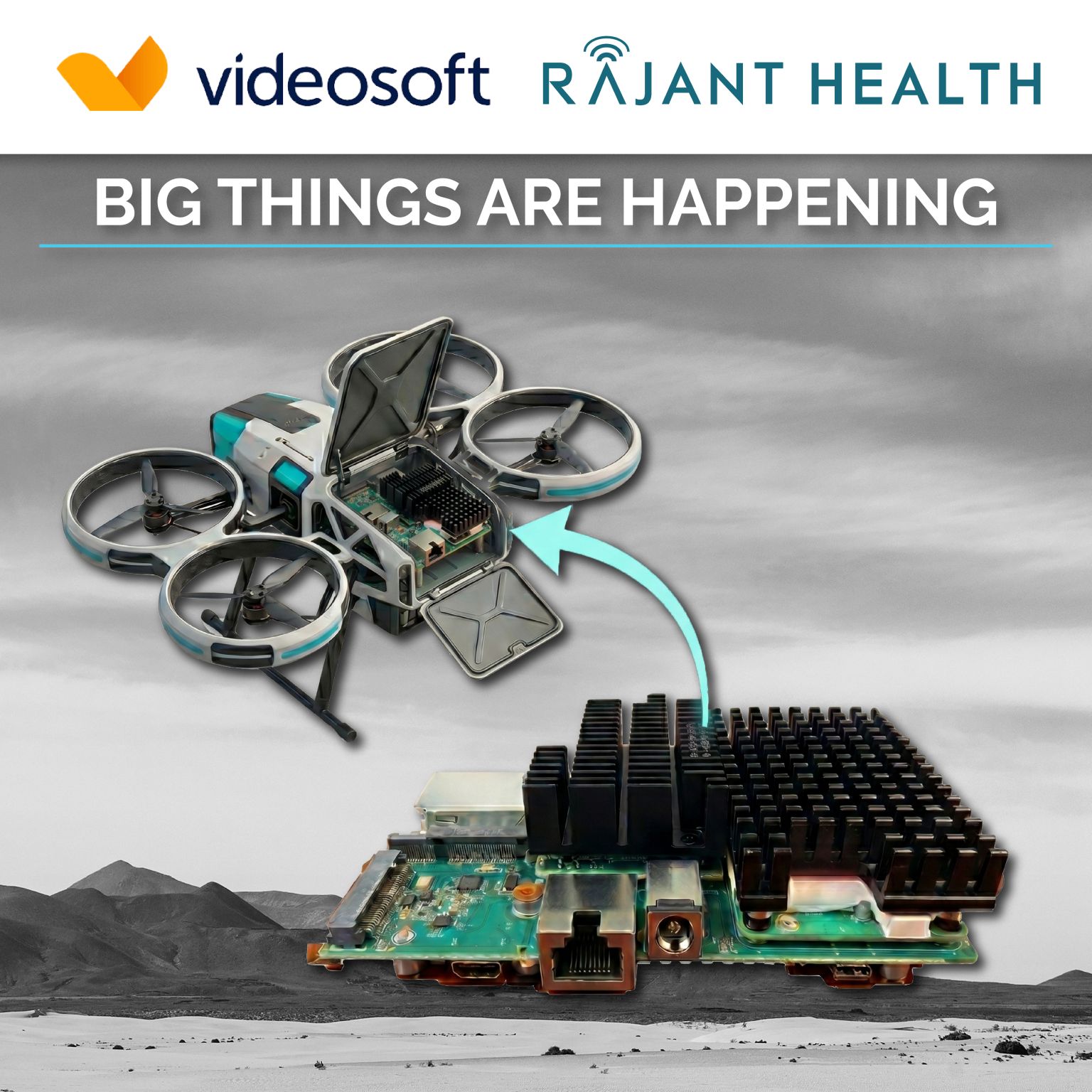
Rajant’s smallest and lightest BreadCrumb. Board-level Kinetic Mesh® module for UAVs, UGVs, mobile robotics, and distributed edge platforms operating in motion.
Scalable Fast-Deployable Distributed Edge Infrastructure and Platform for Managing Your Devices, Data, & Apps.
Cowbell provides a unified management plane across devices, clusters, networks, and applications. CORA runs on every node and manages orchestration, data movement, and autonomous execution under disconnected conditions. ATLAS provides governance, identity, telemetry, lifecycle control, and commercial operations from the cloud.
Together, CORA and ATLAS establish a clear mental model: execution and autonomy at the edge, governed by policy, identity, and lifecycle control in the cloud.
Edge execution plane
Apps, services, orchestration, clustering, resilience
Simultaneously ingests MQTT, ROS, Modbus, RTSP, HTTP/HTTPS, Serial/USB, BLE, sockets, and more through the Sensor Adapter Service.
Runs fully autonomously without internet dependency, including offline updates and local artifact distribution.
Supports containerized and non-containerized workloads with simplified app delivery, service discovery, and observability.
Add or remove nodes wirelessly and rebalance workloads across the cluster with redundancy and failure tolerance.
Runs on Jetson Orin Nano/NX, Raspberry Pi CM5, and additional supported hardware without hard vendor lock-in.
Native Kinetic Mesh® integration enables multi-hop, self-healing connectivity with no central controller dependency.
RBAC, OIDC SSO, ACL tokens, SSH certificates, encrypted communications, audit logging, and role-scoped operations.
Open platform for customer applications, third-party integrations, certified hardware partners, and marketplace expansion.
Every Cowbell node runs CORA, delivering real-time AI processing, multi-node clustering, and resilient Kinetic Mesh® networking. Choose the form factor that matches your deployment — or bring your own compatible hardware.
ECB-MX-Y-NZ
A ruggedized industrial edge compute and networking appliance based on NVIDIA Jetson Orin Nano/NX or Raspberry Pi CM5, with embedded Rajant AG1 or DX5 BreadCrumb running CORA. Delivers up to 100+ TOPS of AI compute in a hardened enclosure built for static or mobile deployment in extreme environments.
Organizations running AI-intensive workloads in harsh, outdoor, or infrastructure-poor environments where uptime, security, and raw compute power are non-negotiable.
Your deployment demands high AI compute, rugged outdoor durability, embedded mesh networking, and multi-node clustering — and you need it to run fully autonomously without cloud connectivity.
FCB-DX-Y-DX5Z
A SWaP-optimized, OEM-grade embeddable edge compute module based on Raspberry Pi CM5 with an integrated DX5 BreadCrumb weighing under 150g. Designed to ride inside drones, UGVs, AMRs, and mobile platforms — including as the embedded compute core of sQuare and Circle Cowbell variants.
System integrators, OEM builders, and operators who need edge AI and mesh connectivity embedded directly in mobile platforms, without sacrificing size, weight, or power budgets.
You are building or operating mobile platforms — drones, robots, or vehicles — that need onboard edge AI and resilient mesh connectivity in a minimal Size, Weight, and Power footprint.
SCB-DX-Y-DX5Z
A wall-mounted ambient edge gateway and enterprise Wi-Fi access point with an embedded Flying Cowbell running CORA. Optimized for passive data collection, sensor aggregation, and site-level intelligence — with LED and touch display interfaces for glanceable status. No GPU, designed for large-scale, cost-effective indoor deployments.
Healthcare facilities, smart buildings, campuses, and elder care environments where ambient intelligence needs to be invisible, scalable, and easy to deploy across many rooms or zones.
You need to deploy intelligent, always-on sensor collection and edge compute across many indoor spaces — at lower cost and power per node — where aesthetics and unobtrusiveness matter.
CCB-DX-Y-DX5Z
A desktop interactive edge intelligence device with an embedded Flying Cowbell running CORA. Features a circular touch display and LED ring for near-field voice-activated and touch-based interaction — supporting AI-driven triage agents, real-time health alerts, VoIP consultation, and local sensor fusion without cloud dependency.
Telehealth, elder care, and clinical environments where patients or at-risk individuals need an always-on, AI-powered care interface that operates locally and escalates intelligently.
You are deploying interactive, patient-facing care intelligence — particularly in home care, elder care, or telehealth settings — where local AI and offline operation are critical to continuity of care.
Cowbell's software stack is hardware-agnostic by design. CORA can be deployed on a broad spectrum of existing hardware — from ARM/Linux single-board computers and Intel x86 platforms to NVIDIA Jetson-based systems provided by OEM partners and system integrators. Breadcrumb integration is optional for third-party variants, giving you flexibility over your networking layer.
If you have an existing edge compute investment — a ruggedized server, a tablet fleet, or a custom-built platform — CORA may already be compatible. Reach out to RHI and we'll assess your hardware for Cowbell certification and integration support.
Contact RHI for Compatibility →Biometric, motion, environmental, and contextual — fusable in real time at the edge.
BLE, Wi-Fi, LTE, Satellite, and NFC active concurrently across any environment.
Full access to raw sensor waveforms via open APIs — no vendor lock-in, no dependency on a mobile device or cloud.
Fast iteration and multiple form-factor packaging — wrist, arm, animal, and custom deployments.
Improvement in pulse rate accuracy during exercise through patented motion artifact removal.
Improvement in SpO2 estimation across skin tones via color-sensor-assisted sensor fusion.
Near-clinical-grade pulse rate and SpO2 demonstrated against reference clinical devices.
QStat was purpose-built to overcome the limitations of consumer-grade wearables in mission-critical environments: no raw data access, motion artifacts degrading measurement quality, vendor lock-in, and unreliable connectivity in difficult RF conditions.
With 50+ configurable onboard sensors, patented Motion Artifact Removal, multi-modal communications, and hub capability for external BLE devices, QStat delivers continuous biometric intelligence for clinical, industrial, and operational use cases.
| SENSOR SUITE | DESCRIPTION | LIVE DATAONLINE |
|---|---|---|
| PPG | HR, SpO2, RR, HRV, raw waveforms | 72 bpm · SpO₂ 98.2% · RR 16/min · HRV 42ms ● |
| 9-Axis IMU | Activity, falls, orientation, navigation | X +0.12 Y −0.04 Z +0.98 g · Walking ● |
| GNSS | GPS, GLONASS, Galileo, BeiDou | 37.7749°N 122.4194°W · 12 sats · 1.4m CEP |
| ECG | Spot ECG, v4+ raw waveform | |
| GSR | Skin conductance, stress and hydration context | 4.2 µS ↗ · Low Stress |
| Skin Temp | Continuous skin surface temperature | 36.6 °C · → Stable |
| Barometer | Altitude and event context | 1013 hPa · 52m ASL |
| Color Sensor | Monk Skin Tone (MST) scale detection for accurate SpO2 across all skin tones | MST-04 · Medium · ● Calibrated |
| Proximity | Skin contact compliance detection | 1.8mm · ● On-skin |
| Audio | Microphone and speaker | −42 dBFS |
| BLE Hub | Up to 14 simultaneous external BLE devices | 5 / 14 linked · −67 dBm avg |
| + and much more... | ||
BreadCrumb DX5 is Rajant’s smallest and lightest mesh radio to date: a 40 × 78 mm board-level module weighing just 47g without heatsinks. It is purpose-built for UAVs, UGVs, autonomous systems, mobile surveillance, and embedded platforms where SWaP constraints matter.
Powered by Rajant’s patented InstaMesh® software, the DX5 forms and heals mesh connections autonomously and interoperates with the broader BreadCrumb ecosystem across distributed field networks.
Coordinates communications across autonomous aerial fleets with lightweight board-level integration.
Keeps mobile robots mesh-connected across dynamic indoor/outdoor environments and mixed terrain.
Extends mesh networking from fixed infrastructure to moving assets, operators, and distributed sensing nodes.
Built on Cowbell, QStat, and DX5, RHI’s solution layer delivers domain-specific systems for operational readiness, clinical research, oncology remote monitoring, and distributed edge decision support.
MEMOS supports persistent crew and warfighter monitoring in maritime, expeditionary, and high-threat operational environments through passive physiological collection, environmental correlation, command-level dashboards, individual feedback, and longitudinal analytics validated in shipboard-representative Navy testing.
“MEMOS is not merely a data collection tool. It is a secure clinical intelligence operating system.”
Edge-native, air-gapped clinical trial infrastructure for intraoperative studies, perioperative monitoring, translational animal research, device validation, secure hospital-side AI workflows, and multi-omics expansion without public cloud dependency.
RHI’s oncology monitoring model combines QStat and Cowbell to deliver continuous, patient-verifiable remote monitoring, flexible home-to-clinic data pathways, reduced manual check-ins via edge-native AI, and earlier adverse-event warning across distributed care environments.
Fentanyl and CBRN exposure modeling using controlled physiologic datasets, blood biomarkers, and environmental inputs to inform translational pathways from preclinical models toward human applicability.
Supports human subjects, large animal models, and custom research deployments without redesigning the sensing layer.
Replaces handwritten documentation with structured digital annotation and publication-ready reporting workflows.
Enables time-synchronized comparison to reference devices, calibration extraction, error modeling, and structured export.
Provides direct access to raw PPG, IMU, temperature, and environmental streams for feature engineering and modeling.
Supports local acquisition, training, deployment, active learning, and controlled model refinement under secure conditions.
Supports cohort-based trials, multi-arm studies, and parallel validation workflows with centralized coordination.
RHI’s core platforms are designed to support high-consequence environments where local compute, resilient communications, & integrated sensing are essential.
Distributed field aggregation and decision support across formations, logistics nodes, and mobile command environments.
Rajant mesh plus Cowbell orchestration preserve mission applications without cloud dependency or fragile central controllers.
Shared situational data lets teams coordinate autonomous systems, manned assets, and personnel in motion.
Wearables and edge sensors surface fatigue, stress, exposure, and mission risk before they become operational failures.
Cowbell turns Rajant mesh-connected forces, vehicles, sensors, and wearables into a shared operational fabric for command-and-control, local AI processing, readiness monitoring, and low-latency autonomy at the tactical edge.
Geo-fenced alerts, evacuation workflows, and wearable-linked safety logic reduce exposure during blasting and underground incidents.
Telemetry from haul trucks, drills, loaders, and underground machinery feeds edge analytics for uptime planning and failure prediction.
Dust, gas, vibration, noise, and air-quality signals are correlated with worker physiology for compliance and operational risk awareness.
Low-latency mesh connectivity supports remote control, local video analytics, and resilient visibility across dynamic pit and tunnel environments.
Cowbell brings together equipment telemetry, worker wearables, environmental sensors, and edge AI to support pit-wide safety, productivity, and remote operations across expansive, constantly changing sites.
In tunnels and shafts where conventional connectivity breaks down, Cowbell and Rajant mesh maintain routing, orchestration, sensor fusion, and low-latency control to keep workers, vehicles, and monitoring systems connected.
Teleoperation, autonomous equipment control, and local AI workflows run at the edge without waiting on distant infrastructure.
Air quality, emissions, noise, spills, and operational telemetry feed compliance and alerting workflows in real time.
Containers, pallets, forklifts, cranes, and rolling assets stay tracked across high-mobility facilities.
A unified control plane spans devices, networks, clusters, applications, and analytics across distributed industrial sites.
Cowbell hosts operational apps directly at the port edge so container flows, vehicle coordination, security, and worker safety continue even when central infrastructure is constrained or disconnected.
Cowbell hosts warehouse applications directly at the edge so forklifts, conveyors, AGVs, cameras, wearables, and inventory systems stay coordinated with low-latency visibility across busy logistics environments.
Cowbell unifies worker safety, emissions sensing, asset telemetry, drone inspection, and low-latency control across distributed oil and gas environments where resilient local execution matters.
Structured, secure, air-gapped physiological and environmental data collection in regulated research workflows.
Flexible patient-to-care-team data pathways support high-fidelity longitudinal monitoring, home deployment, and community-clinic scale without ceding data control to a device vendor.
Reference comparisons, calibration studies, and sensor fusion research run on a controlled local edge stack.
Cross-species datasets, raw waveforms, and multi-modal monitoring connect preclinical and clinical research outcomes.
Grounded in the MEMOS Clinical Trial App architecture, Cowbell provides an edge-native, air-gapped execution layer for smart hospitals where intraoperative studies, perioperative monitoring, post-surgical surveillance, and secure clinical data operations must continue under full institutional control.
Using the MEMOS Clinical Trial App model, Cowbell and QStat support animal translational research with modular multi-species hardware, continuous physiological monitoring, and secure local orchestration across surgical, recovery, and longitudinal study workflows.
RHI works with a growing ecosystem of technology, research, and platform partners to accelerate deployment of resilient edge intelligence solutions across mission-critical environments.
Interested in integrating with RHI’s edge intelligence stack or building joint solutions?
Become an Ecosystem PartnerEach collaboration extends the stack in a distinct way, from resilient networking and edge AI to video intelligence, autonomy, and translational clinical research.
Videosoft Global works with RHI to enable efficient, bandwidth-aware video delivery across constrained and mobile edge environments, strengthening real-time visual intelligence at the tactical edge.
Chord Robotics collaborates with RHI on autonomous system coordination and multi-agent robotic operations, helping extend Cowbell into dynamic mobile and swarm-enabled mission sets.
LatentAI partners with RHI to support efficient edge AI deployment, optimization, and mission-time adaptability for resource-constrained operational environments.
CU Anschutz COMBAT TRIAD Lab collaborates with RHI on translational research, clinical and physiological monitoring workflows, and advanced evaluation of edge-enabled healthcare applications.
Rajant provides the resilient Kinetic Mesh networking foundation that underpins RHI’s distributed edge architecture, enabling reliable communications across mobile, fixed, and infrastructure-denied environments.
The EAP is designed to generate credible deployment evidence, validate the ideal customer profile, refine delivery and support assumptions, and establish repeatable go-to-market learning before broad availability.
This intake helps us understand your operational needs, technical priorities, and areas of interest so we can tailor demonstrations, evaluations, and engagement models—including pilots, integrations, ecosystem partnerships, and participation in our Early Adopter Program (EAP).
Responses are based only on official Rajant and RHI content.
Your API key is stored only in your browser and sent directly to the AI provider. It is never saved on our servers.
Enter your email to get started. If we know you, your chat history loads automatically. New? We'll register you — no other details needed.