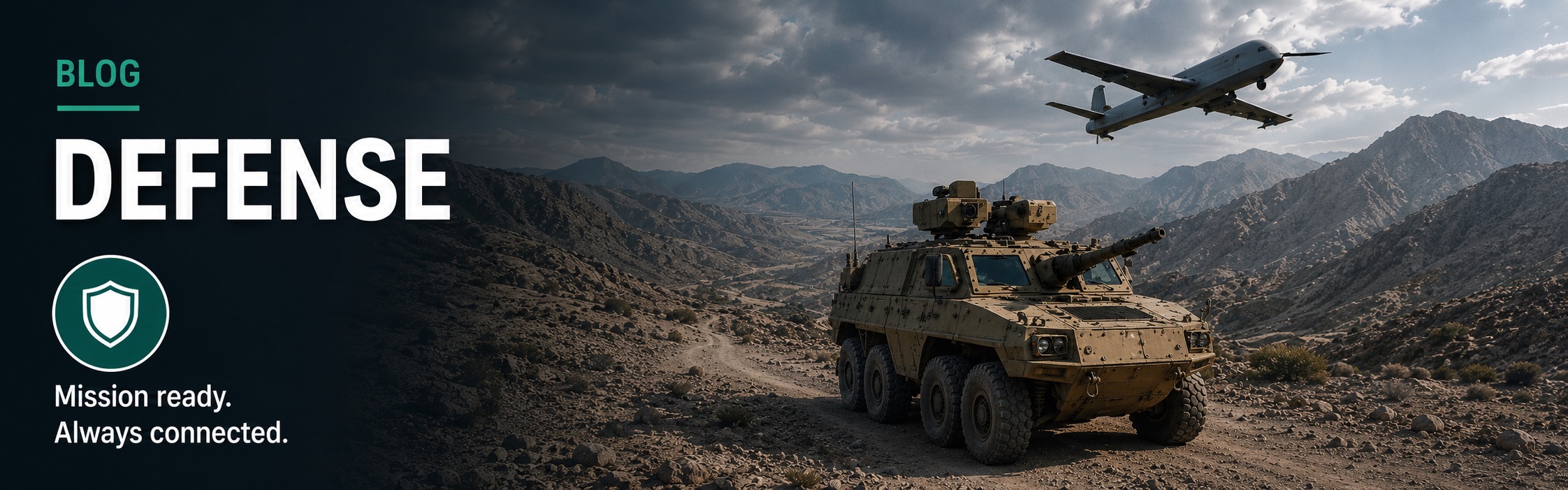
Tactical edge AI requires resilient mesh networks, not traditional star topologies, to ensure operational continuity and accelerate decision-making in contested environments[4]. This architectural shift is critical for defense applications where centralized systems pose a strategic disadvantage, leading to potential mission failures and increased operational costs. The U.S. military, for instance, faces increasing pressure to adopt resilient network architectures that can withstand sophisticated adversarial attacks and maintain operational tempo in contested environments [5].
The Strategic Disadvantage of Star Topologies
Traditional star network topologies, where all devices connect to a central hub, are inherently vulnerable in dynamic and contested environments. While simple to set up and manage in stable settings, their reliance on a single point of failure makes them unsuitable for tactical operations. If the central hub is compromised by jamming, physical damage, or connectivity loss, the entire network collapses, severing critical communication and data flow. This dependency creates a strategic disadvantage, particularly when real-time information from personnel, assets, and sensors is critical for rapid and independent decision-making.
In military contexts, the consequences of network downtime are severe. Unplanned network downtime can lead to significant financial losses for large enterprises, with estimates suggesting costs of up to $5,600 per minute for critical systems [1]. For defense and public safety professionals, a latency issue or network failure can mean the difference between mission success and operational failure, potentially endangering lives. Commanders need to make decisions in real-time, and delays in data or communication directly impact performance and can compound the effect of slow human decision-making. This highlights the imperative for network architectures that can withstand disruption and ensure continuous operation.
Lessons from Mining: The Power of Kinetic Mesh®
The challenges faced by defense in DDIL environments find striking parallels in demanding commercial sectors like mining [1]. Mining operations often occur in remote, harsh, and constantly changing landscapes, where heavy machinery is mobile, and connectivity is frequently intermittent. A global energy major, for instance, operates vast open-pit mines where continuous, real-time data from autonomous haul trucks, personnel, and sensors is essential for safety, efficiency, and productivity. These environments demand networks that are resilient, mobile, and capable of supporting edge AI workloads without relying on a central point of control.
Rajant Kinetic Mesh® networks, powered by BreadCrumb® nodes, offer a proven solution to these challenges. Unlike star topologies, Kinetic Mesh® operates as a peer-to-peer, self-healing network where every node can communicate directly with every other node, creating multiple redundant paths for data. This means there is no single point of failure; if one path or node is compromised, data automatically reroutes through another, ensuring continuous connectivity and operational uptime. This inherent resilience is critical for tactical edge AI, where uninterrupted data flow is paramount for real-time inference and decision support.
Consider the quantifiable impact of safety improvements in mining. Between 2008 and 2017, fatal accidents in the U.S. mining industry resulted in 355 fatalities, incurring significant societal costs and highlighting the critical need for enhanced safety measures [2]. Applications like Rajant Health's BlastBlocker, deployed within a Kinetic Mesh® ecosystem, provide improved operational awareness and augment safety measures during blasting events through comprehensive real-time worker and equipment monitoring at the edge. By enabling continuous monitoring and rapid response, such systems directly contribute to reducing the frequency and severity of incidents, translating into significant cost savings and, more importantly, saving lives. For example, preventing common workplace injuries, such as a fractured hand, can lead to substantial cost savings, with estimates for direct and indirect costs ranging from $2,000 to over $20,000 per incident depending on severity and lost work time [3]. This demonstrates a clear ROI for investing in resilient edge infrastructure that enhances safety and operational awareness.
Enabling Tactical Edge AI with the Cowbell Platform
The Cowbell Platform further extends the capabilities of Kinetic Mesh® by providing a scalable, fast-deployable, distributed edge infrastructure for managing devices, data, and applications. It offers a unified data fabric that seamlessly ingests heterogeneous sensor feeds, transforming raw data into a common operating picture for actionable insights. Crucially, Cowbell simplifies AI deployment, allowing organizations to apply and utilize AI in production without needing to hire a large team of specialized engineers. This significantly reduces the time-to-value for AI initiatives at the edge, accelerating the adoption of advanced capabilities in defense.
For defense applications, this means AI workloads can run where the sensor and the shooter live, not where the hyperscaler lives. Whether it's supporting manned-unmanned teaming, providing human-performance telemetry for dismounted operators, or enabling counter-UAS sensor fusion, the combination of Kinetic Mesh® and the Cowbell Platform delivers the resilience, low latency, and distributed compute necessary for decision dominance in complex, contested environments. This architecture ensures that critical data pipelines remain operational even when connectivity drops, preventing data loss and maintaining standardized data for consistent use.
Conclusion
The shift to tactical edge AI is not merely a technological upgrade; it is a strategic imperative for modern defense. Relying on fragile star topologies for mission-critical operations introduces unacceptable risks and costs. By adopting resilient Kinetic Mesh® networks and the Cowbell Platform, defense organizations can leverage proven lessons from demanding industrial environments like mining to ensure continuous operational capability, accelerate decision-making, and enhance safety in the most challenging conditions. This approach delivers the ultra-low latency, cloud independence, and robust data security essential for achieving information and decision advantage at the speed of relevance.
Start a scoped conversation
Want to see what this looks like for defense? Start a scoped conversation →
References
- [1] Vislink. Why Low Latency is Critical in Broadcast and Military Communications. 2023. https://www.vislink.com/blog/why-low-latency-is-critical-in-broadcast-and-military-communications/ ↩
- [2] U.S. Department of Defense. Summary of the Joint All-Domain Command & Control (JADC2) Strategy. DoD, 2022. https://media.defense.gov/2022/Mar/17/2002958406/-1/-1/1/SUMMARY-OF-THE-JOINT-ALL-DOMAIN-COMMAND-AND-CONTROL-STRATEGY.pdf ↩
- [3] Chief Digital and Artificial Intelligence Office. Combined Joint All-Domain Command and Control (CJADC2). DoD CDAO, 2024. https://www.ai.mil/Initiatives/CJADC2/ ↩
- [4] Atlantic Council. Employing artificial intelligence and the edge continuum for joint operations. Atlantic Council, 2024. https://www.atlanticcouncil.org/content-series/strategic-insights-memos/employing-artificial-intelligence-for-joint-operations/ ↩
- [5] Curtiss-Wright Defense Solutions. Creating the Data Fabric for Tactical Edge with Software-Defined Wide Area Networking. Curtiss-Wright, 2024. https://defense-solutions.curtisswright.com/media-center/articles/creating-data-fabric-tactical-edge-software-defined-wide-area-networking ↩